Why Waialae Avenue Keeps Losing the Businesses It Made Famous
If you’ve spent any time on Waialae Avenue lately, you may have noticed something interesting: businesses are moving around, new concepts are popping up, and some longtime spots are getting bigger — or moving on.
At first glance, a business leaving Kaimukī might sound like a sign that the neighborhood is changing in the wrong direction.
But look a little closer, and the story is different.
We Heart Cake Co. closed its longtime storefront at 3468 Waialae Avenue at the end of May after about six years in Kaimukī. By June, it had soft-opened a new location in McCully, followed by a grand opening in August.
Owner Kanako Kiyabu had spent more than a year looking for the right space. The move wasn’t because business had slowed — quite the opposite.
The bakery’s butter mochi and daifuku had grown beyond the little kitchen behind its Kaimukī counter, with wholesale products now reaching 7-Eleven, Times Supermarkets and Aloha gas stations across Oʻahu.
Pitacus Chop Art made a similar move. The vintage and upcycled fashion shop relocated from Waialae Avenue to the Mō‘ili‘ili Community Center, in the former Hidden Treasures space, gaining nearly four times the square footage.
Two businesses. Two different industries. Same basic problem:
Waialae Avenue’s small storefronts can be hard to grow into.
That’s part of what makes Waialae Avenue so special — and increasingly challenging.
Many of the buildings were designed for an older style of neighborhood retail: small storefronts, shallow spaces and just enough room for a local shop.
That works beautifully when you’re grabbing shave ice, picking up dinner or browsing a small boutique.
But what happens when that small business becomes a really successful one?
This year, we’ve seen a few different answers.
Share the space. Entrepreneur Summer Shiigi operates Ten Tomorrow and Daily Whisk Matcha from the same Waialae Avenue storefront.
Reinvent existing spaces. Chef Chris Kajioka’s restaurant group has been moving and reshaping concepts within buildings it already occupies rather than constantly looking for new space.
Or move. We Heart Cake Co. and Pitacus Chop Art both left Waialae Avenue when they needed more room to grow.
Different strategies, but they all point to the same thing: Kaimukī has demand. The buildings don’t always have the square footage.
The biggest example is sitting right on Waialae Avenue.
The Queen Theater has been closed for roughly 40 years, even as the businesses around it continue to thrive.
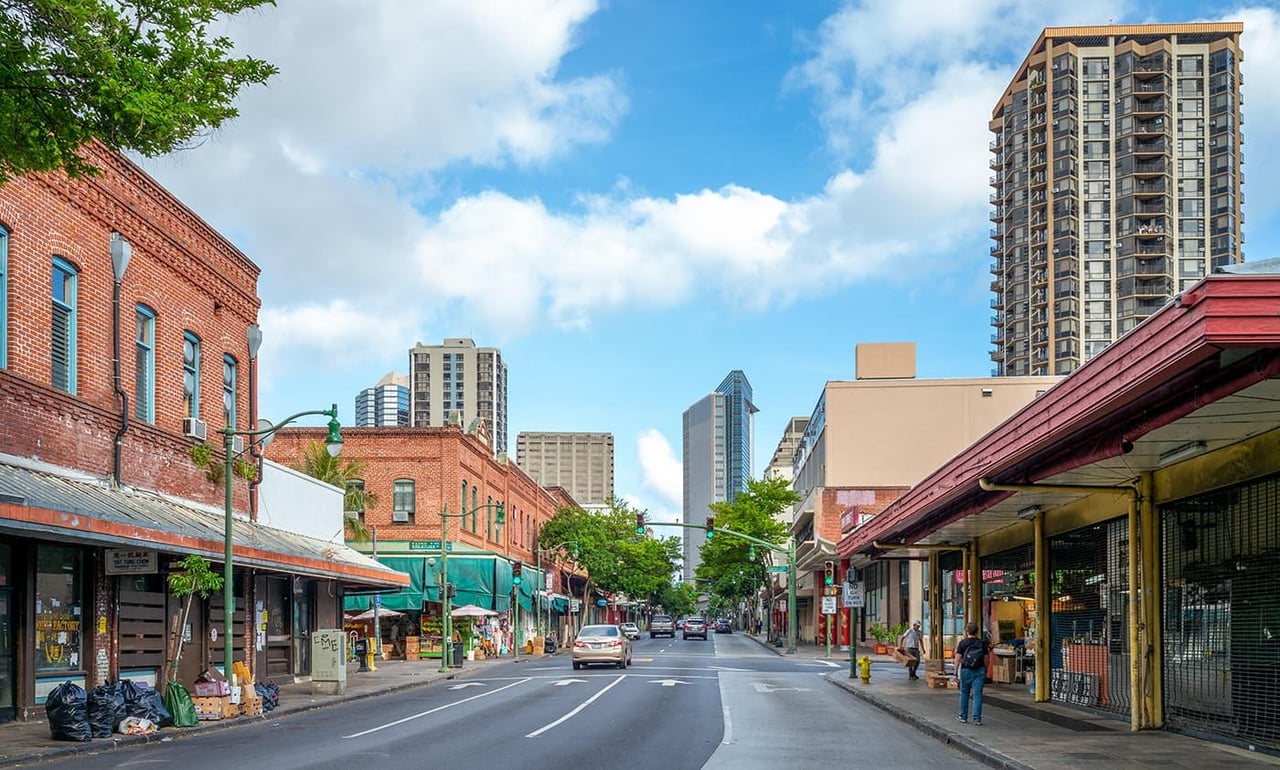
Walk the block and you’ll find longtime local favorites, busy restaurants and newer spots drawing their own crowds. The theater sits in the middle of all that activity, but its size and layout make it difficult to fit into the small-business rhythm that defines the avenue.
The building is more than 12,000 square feet, with a theater layout that isn’t easily divided into the narrow, flexible storefronts that dominate Waialae.
In June 2026, the Honolulu City Council adopted Resolution 26-127, allowing the property to be considered for potential government use. Shortly afterward, CBRE was selected to market the 12,497-square-foot building and its 10,396-square-foot parcel.
It’s a very different kind of real estate problem from the one facing We Heart Cake Co. The bakery needed more space. The Queen Theater has plenty of space — it just needs the right use.
The recent changes don’t necessarily point to a neighborhood losing businesses.
They point to a neighborhood that has become too successful for some of its old spaces.
You can see it in the bakery that needed a bigger kitchen, the boutique that needed four times the space, and the restaurant group finding ways to reinvent the spaces it already has.
And new businesses are still coming.
Bad Ass Coffee of Hawaiʻi opened its first Honolulu location on Waialae Avenue in March, designed around a smaller footprint with limited seating and a grab-and-go counter.
That may be the direction Waialae continues to take: smaller concepts, creative use of space and businesses that know how to make every square foot count.
Because the real story on Waialae Avenue isn’t that businesses are leaving.
It’s that Kaimukī is growing — and its iconic little storefronts are trying to keep up.
Specializing in mid-century, modern Hawaii homes, her desire to broaden the scope of the service has been successfully achieved as a 5-time award winner of the Top 100 agents in Hawaii by Hawaii Business Magazine.