Chinatown's Best New Restaurants Keep Opening in Someone Else's Old Address
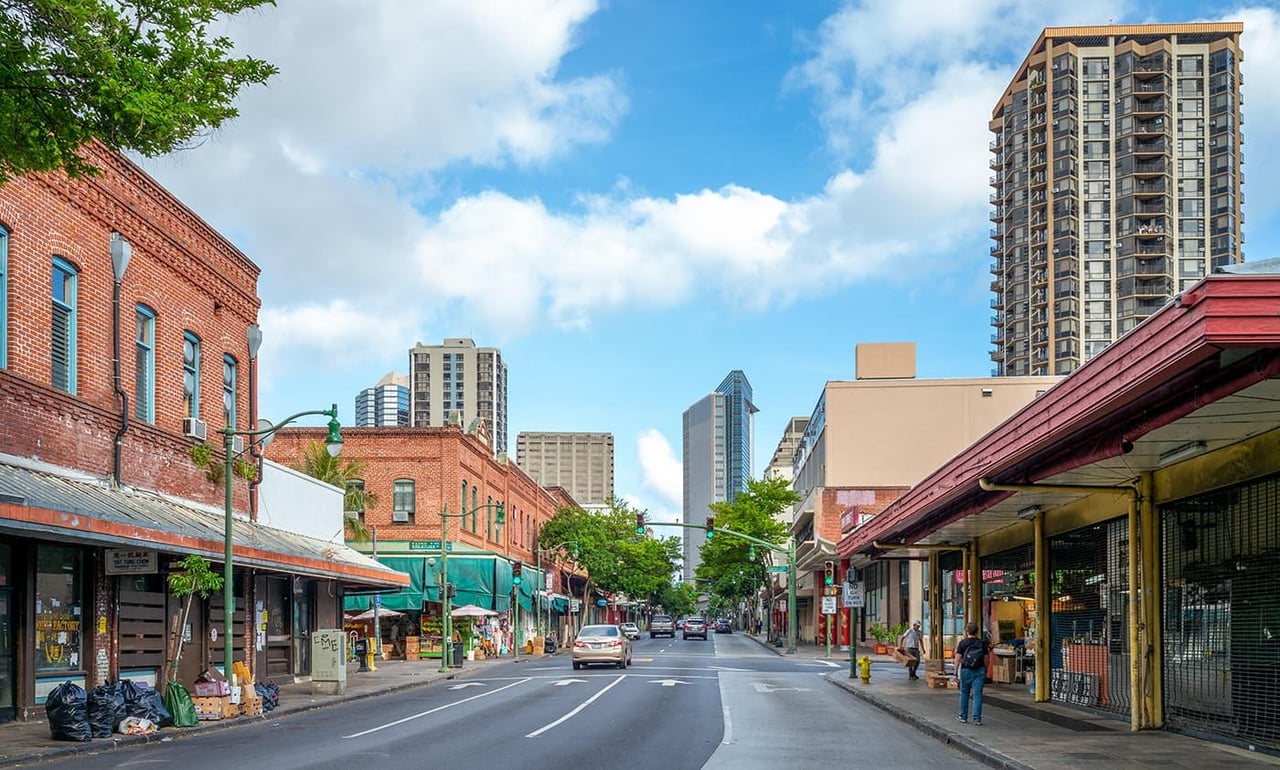
Walk down Hotel Street on a Tuesday night these days and you might have to wait for a table. That would have been a pretty unusual sight five years ago. Back then, Chinatown could feel like it shut down after the produce stalls closed, with the exception of First Friday. Now, people are coming down on an ordinary weeknight because there’s somewhere they actually want to go. And here’s the part I find especially interesting from a real estate perspective: most of the restaurants bringing people into Chinatown aren’t in new buildings. They’re in old spaces. Giovedi took the spot next to Fête. Pewa by Pono Potions moved into the former Du Vin space on Bethel Street. Daji Spicy Pavilion took over the old Seasons Fire & Ice space inside Chinatown Cultural Plaza. And on Smith Street, SingSing Thai Street Food is now in the space where Opal Thai used to be. Different restaurants. Different owners. Different cuisines. Same storefronts. To me, that says something about where Chinatown is right now. This isn't simply a story about cheaper rents or a few new restaurants opening. It's a neighborhood figuring itself out again, one storefront at a time.
There are certain spaces in Chinatown that seem to have a life beyond any one restaurant. The former Du Vin space on Bethel Street is one of them. After Du Vin closed, Pewa by Pono Potions moved in, with Peter Hessler and Michael Cabagbag behind the concept. They already operate Pō'ai by Pono Potions a couple of blocks away on Smith Street, so they weren't exactly strangers to the neighborhood. The address stayed the same. The idea changed. You see something similar at Chinatown Cultural Plaza. Seasons Fire & Ice, a hot pot restaurant, eventually gave way to Daji Spicy Pavilion, a small five-table restaurant serving Guizhou-style noodle soups facing the plaza's courtyard stage.
That's a pretty specific culinary concept, and one that didn't require a shiny new building to find a home. It needed a space. And a landlord willing to give someone else a chance to make something of it. That's the part I pay attention to. Chinatown's older buildings aren't necessarily the problem. In many cases, they're exactly what makes the neighborhood interesting. The question is whether the next business can see the potential in a space that already has a history.
Giovedi is probably the clearest example of what's changing. Chef Bao Tran and his wife, Jennifer Akiyoshi, started Giovedi as a pop-up before opening their permanent location on Hotel Street, right next to Fête. Then, about a year and a half later, Bon Appétit named Giovedi one of its Best New Restaurants in America for 2025, one of just 20 restaurants selected nationwide. It was the first Hawaii restaurant on that list since Lineage in 2019. Giovedi also took home Best New Restaurant in Hawaii at the 2025 Hale 'Aina Awards, which are judged here by Honolulu Magazine.
And then came Chao. The Vietnamese restaurant was recognized at the 2026 Hale 'Aina Awards, taking home both Best New Restaurant and Best Vietnamese Restaurant. Two restaurants. Two different cuisines. Two different award cycles. And both are pointing people toward the same little stretch of Chinatown. I think that's worth noticing. Sometimes a neighborhood gets discovered from the outside before everyone who lives here realizes what's happening in their own backyard.
Daji is interesting for another reason. Honolulu Magazine has been following a larger wave of regional Chinese restaurants opening in Chinatown — including several new restaurants representing cuisines from Guizhou to Hunan. That's different from one chef opening a restaurant and hoping people show up. It's several operators looking at the same neighborhood and deciding there is an audience here for something new. Daji's Guizhou-style food is a good example. The cuisine has its own sour-and-spicy character that's different from the Sichuan flavors many of us are more familiar with. Until recently, you couldn't really get that experience on Oʻahu. Now you can walk a few blocks through Chinatown and find restaurants introducing people to regional Chinese cuisines they may not have tried before. That's how a food neighborhood starts to become a neighborhood destination.
For a long time, if you wanted to see Chinatown come alive at night, you knew when to go. First Friday. The monthly art walk would bring people downtown from the Hawaiʻi Theatre area toward Nuʻuanu, with galleries and museums opening their doors and restaurants preparing for the crowds. First Friday is still part of Chinatown's identity. It always will be. But something has changed. You don't have to wait for the first Friday of the month anymore.
Giovedi. Chao. Pewa. Daji.
They're giving people a reason to come down on a Tuesday. And I think that's one of the more meaningful changes happening here. A neighborhood becomes part of your everyday life when you stop thinking of it as somewhere you have to make a special trip to visit. When you can say, "Let's go to Chinatown tonight."
That's different.
If you're curious, these are a few places I'd put on your Chinatown list:
Giovedi — right next to Fête on Hotel Street. If you haven't been yet, this is one I'd plan ahead for.
Chao — a Vietnamese restaurant that's part of the newer wave of places giving Chinatown another reason to visit.
Pewa by Pono Potions — in the former Du Vin space on Bethel Street, with cocktails and an all-day bistro menu.
Daji Spicy Pavilion — inside Chinatown Cultural Plaza, and a good stop if you want to try something you probably haven't had elsewhere on Oʻahu.
None of these places are really secrets anymore.
But that's okay.
What interests me isn't whether Chinatown is "up and coming." We've been saying that about Chinatown for a long time. What interests me is that the old buildings are being used again. That businesses are moving into spaces with history instead of waiting for everything to be rebuilt. That people are coming downtown on an ordinary Tuesday because they have somewhere they want to be. For those of us who have watched Honolulu neighborhoods change over the years, those little shifts can tell you a lot.
Because real estate isn't just about what gets built. Sometimes, it's about what happens when someone takes an old space and gives it a new reason to open its doors. And Chinatown seems to be doing quite a bit of that right now.
If you're looking at Honolulu real estate, I always encourage you to look beyond the house itself. Pay attention to what's happening around it: who's opening, who's moving in, which storefronts keep getting reinvented, and where people are choosing to spend their evenings.
Those details can tell you something about a neighborhood that a listing description never will.
Specializing in mid-century, modern Hawaii homes, her desire to broaden the scope of the service has been successfully achieved as a 5-time award winner of the Top 100 agents in Hawaii by Hawaii Business Magazine.