Leave a Message

Thank you for your message. We will be in touch with you shortly.

What Changed at Mānoa Marketplace, And How the Valley Is Eating Its Way Through It

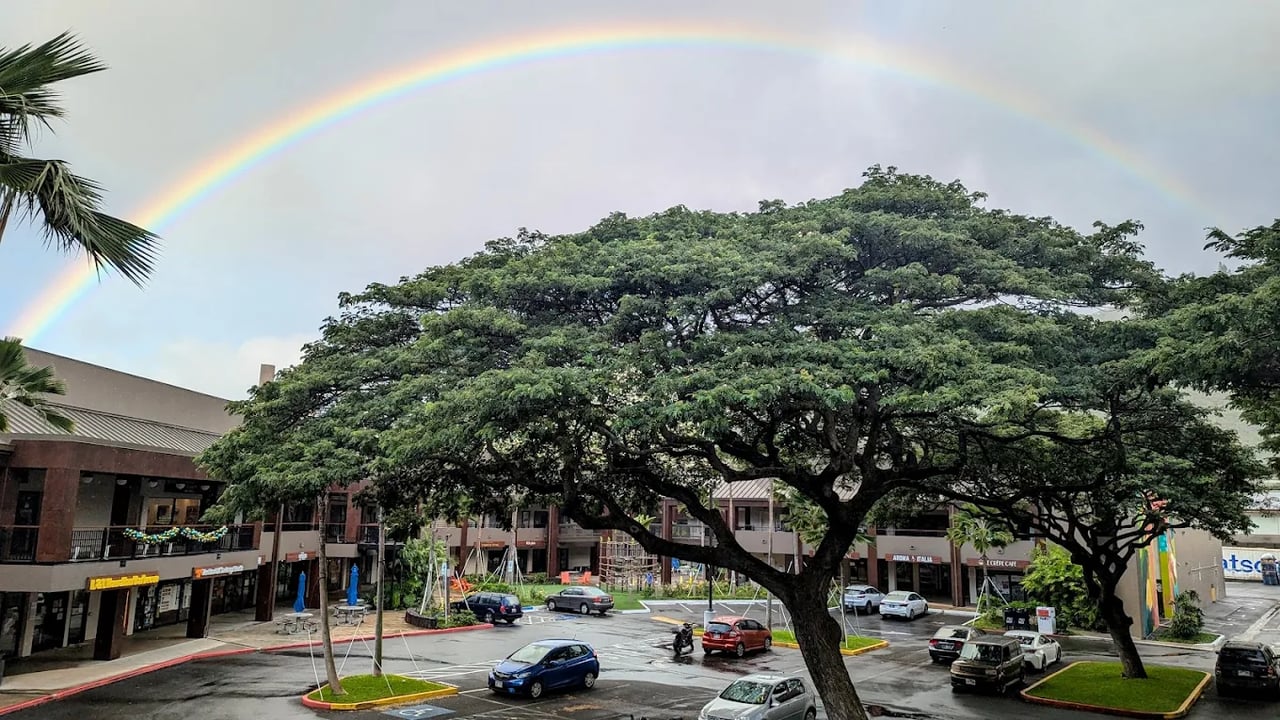
For years, Mānoa Marketplace was the place you stopped on the way home. Safeway for the week, Longs for what you forgot, a bakery box from BRUG if you were feeling generous, then back up the valley before the light faded. It was useful. It was not a destination.

That sentence is no longer true. Somewhere between the courtyard renovation and the arrival of a new restaurant group with Chinatown pedigree, the marketplace crossed a line most residents can feel without quite naming. Dinner in the valley used to mean driving out. Now it can mean walking across the parking lot.

The shift, in one shopping center

The clearest signal that the marketplace has been rebuilt as a gathering place, not just a services strip, is institutional: the renovation was honored by NAIOP with the Renovation Award in the Commercial/Retail over 40,000 SF category, alongside recognition from the GCA Build Hawai'i awards. Awards are lagging indicators. What matters on the ground is that the renovated courtyard now hosts the farmers market, and three new food-and-beverage concepts opened in spaces that used to belong to a bank, a Japanese restaurant, and a small retail bay.

Those three concepts share a parent. Dusty Grable, who with chef Jesse Cruz opened Lucky Belly, Livestock Tavern and Tchin Tchin Bar on one Chinatown intersection starting in 2012, now has three food-and-drink establishments at the newly renovated Mānoa Marketplace. If Chinatown is the reference point, the implication for Mānoa is not subtle. Grable's group has done this before, in a district that people used to drive past.

The Lovers + Fighters trio, decoded

Each of the three has a distinct role in the week. Read them together and the marketplace's new evening rhythm makes sense.

Uncle Paul's Corner Store. On the ground floor of the shopping center by the post office, Uncle Paul's Corner Store is a specialty retail and bottle shop run by sommeliers, bartenders and chefs. Translation: this is where you pick up the bottle on the way to a friend's house in Woodlawn instead of grabbing something functional from Safeway. It is the piece of the trio residents will interact with most casually.

Little Plum. Little Plum serves affordable riffs on local favorites such as beef stew, karaage chicken, yakisoba and chicken adobo at lunch and dinner, seats up to 60, with checks averaging $30 at lunch and $50 at dinner. This is the weeknight option. The group's own inspiration word for it was nostalgia, and the space itself is the old Bank of Hawai'i, which most Mānoa residents remember using.

Lady Elaine. The more ambitious of the two restaurants, and the one that most changes the character of the marketplace. Chef Casey Kusaka's menu draws from Greek, Moroccan, Lebanese and Spanish cuisines and includes fresh pastas, lamb and local seafood, with a bar featuring craft cocktails and wine; the dining room, bar and outside patio hold about 100 combined seats, and checks for full meals average $35 at lunch and $70 at dinner. It is open daily except Sunday from 5 to 9 p.m. at 2756 Woodlawn Dr.

Kusaka's résumé is the reason the neighborhood took notice. Casey Kusaka worked for Grable at La Vie and Quiora and before that at Momofuku Noodle Bar in New York City, Californios and Nisei in San Francisco, and 53 by the Sea. That is a Ward Village and San Francisco tasting-menu lineage cooking two miles up Woodlawn Drive.

The theme running through the trio is deliberate. As Grable put it to Aloha State Daily, Uncle Paul's Corner Store was curiosity, Little Plum was nostalgia, and Lady Elaine was neighborhood, a reminder that they are part of a community, and Mānoa felt like an exciting one to join.

What the regulars still do

A common mistake in write-ups of new openings is to treat the new arrivals as if they replaced what was already there. They did not. The reason the marketplace works as a destination now is because the everyday layer underneath it is intact.

The tenants residents actually use in rotation:

  • BRUG Bakery for a morning pastry that pairs with farmers-market coffee
  • Kay's Crackseed for the afternoon snack that has not changed in decades
  • Aroma Italia, O-Bok, Pho Viet Manoa, Le Crêpe Café as the multi-cuisine spine of casual lunch, all clustered within the same block on Woodlawn
  • Leahi Health for the plant-based lunch when the week has been heavy
  • Safeway and Longs/CVS as the errand backbone, open late
  • The post office, which is why Uncle Paul's foot traffic works

That density is unusual for a neighborhood shopping center. Thai, Vietnamese, Korean, Japanese, French, Italian, Chinese, two bakeries, a Safeway, a Longs and an L&L sit together, and on Tuesday, Thursday and Sunday a farmers market sets up in the morning. Most centers in Honolulu offer one or two of those. Mānoa Marketplace offers all of them within a walk.

The farmers market is the metronome

If the new restaurants set the evening rhythm, the farmers market sets the morning one. Every Tuesday, Thursday and Sunday from 7 a.m. to 2 p.m., closed on holidays, the market runs in the newly renovated courtyard with local fruits, vegetables and flowers as well as arts and crafts.

Two things about that schedule are worth internalizing. First, three mornings a week is a lot. It means a resident can build produce shopping into a weekday routine, not a Saturday event that competes with the KCC market. Second, the placement in the renovated courtyard is a deliberate architectural move. The market is no longer a set of tents in a parking aisle. It is the anchor use of the new central space, which is why the same courtyard now feels usable on non-market days as well.

What a week looks like now

The clearest way to feel the shift is to sketch a valley resident's week around the marketplace without leaving it for dinner.

  • Tuesday morning, farmers market for produce and flowers, coffee and a pastry at BRUG on the way out
  • Tuesday or Wednesday evening, Little Plum for a beef-stew-and-karaage weeknight dinner that ends before 8:30
  • Thursday morning, back to the market, then errands at Longs and Safeway on the same trip
  • Friday evening, Lady Elaine at 5 p.m. for the quieter first seating, or 8 p.m. when the room has thinned out
  • Saturday, lunch rotation between Aroma Italia, O-Bok, Pho Viet, or Le Crêpe Café depending on mood, followed by a bottle from Uncle Paul's for someone else's dinner
  • Sunday morning, the market one more time, with the caveat that Sunday is the one night Lady Elaine is closed

Two logistical notes residents will appreciate. Lady Elaine takes reservations on Resy, and walk-ins tend to land at the bar. Parking is easy on weekdays and tight during market mornings and Friday-Saturday dinner peaks, when parking near Safeway and walking across is the reliable move.

Why this matters beyond the food

There is a version of this story that treats new restaurants as amenities, the way a listing sheet does. That misses what has actually happened. A neighborhood shopping center that anchored errands became a neighborhood shopping center that anchors evenings, and it did so with operators whose stated intent was to build for the people who already live here, not for a destination-dining audience driving up from town.

Grable's own phrasing about Lady Elaine, that the group hoped the community would embrace them if they served it well, is the kind of thing restaurant groups say. What makes it worth quoting is that the market response so far has borne it out. Lady Elaine now runs lunch and dinner service six days a week, and its sister concepts opened within months of each other rather than years apart. The bet on the valley worked, which is why there is a bet on the valley at all.

For residents, the practical takeaway is small and specific. The next time someone visits from out of town and asks where to eat, the answer no longer has to route through Kaka'ako or Kaimukī. It can start and end within a five-minute drive of home.


If you find yourself paying closer attention to the character of the neighborhood these days, and thinking about how Mānoa's texture shapes the kind of home you want to be in, Diane Ito would be glad to talk. Request a Personal Consultation to start a conversation grounded in the valley you already know.

Work With Diane

Specializing in mid-century, modern Hawaii homes, her desire to broaden the scope of the service has been successfully achieved as a 5-time award winner of the Top 100 agents in Hawaii by Hawaii Business Magazine.