Leave a Message

Thank you for your message. We will be in touch with you shortly.

The Manoa Termite Inspection Is a Nine-Month Problem, Not a Closing-Week One

Most sellers on Oʻahu treat the termite inspection as paperwork that happens two weeks before recording. In Manoa, that timing is where deals lose money. The same valley conditions that make the neighborhood beautiful — the shade, the daily showers, the deep landscaping close to the house — are the exact conditions a licensed inspector is required to flag on the state's PC-9 form. By the time a buyer is holding that report, the seller has lost the leverage to shape it.

This is a post about sequencing. If you own an older wood-frame home in Manoa and you are thinking about listing in the next year, the inspection you should be planning for is not the one your escrow officer orders. It is the one you order for yourself, quietly, months earlier.

The clause that decides the negotiation

The standard Hawaii Association of Realtors purchase contract puts the termite inspection on the seller. In practice, the seller pays for the inspection, the buyer usually chooses the inspector, and if the report shows visible evidence of infestation, the seller pays for the recommended treatment. Preventive measures are not included in that obligation, which is a distinction worth remembering.

Two mechanical details matter for timing. The Termite Inspection Report is only valid for 15 days after issuance, which is why it lands in the last weeks of escrow. And under paragraph L-3, if substantial damage is discovered that affects the value of the property, the seller has to disclose it and the buyer gains a right to cancel. Minor damage that does not affect value does not trigger that right, but "substantial" is the word that opens the exit.

Read those two rules together and the seller's problem becomes clear. A report you cannot influence, delivered in a window too short to remediate calmly, can hand the buyer a cancellation option or a credit demand at the least convenient moment in the transaction.

Why Manoa is not Kāhala on the PC-9

The PC-9 form asks the inspector to note not only visible evidence of termites but also conditions conducive to future infestation. Earth-to-wood contact. Leaking or damaged roofs. Wood debris in a crawl space. Excessive moisture. Those are the words on the state form, and they are worth reading before you list.

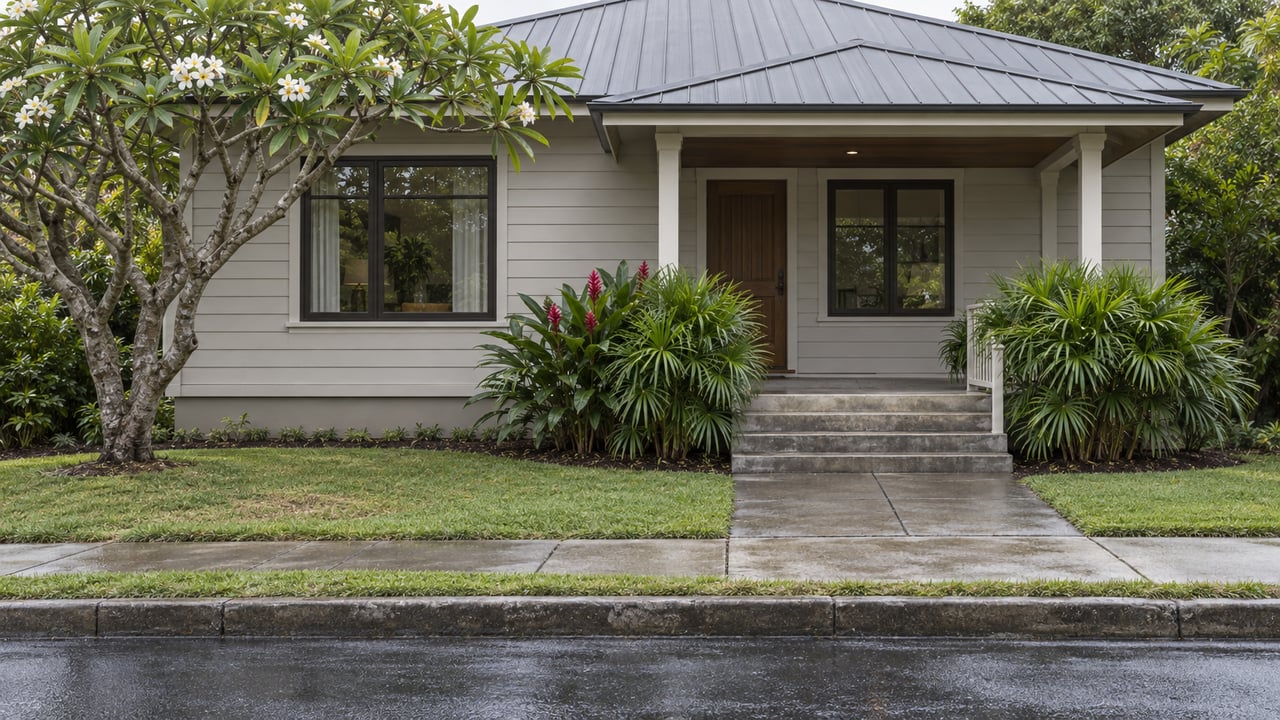
Now overlay Manoa. The Lyon Arboretum station in upper Manoa records roughly 151 inches of annual rainfall spread across about 282 rainy days a year, a tropical rainforest climate by any standard. Homes here sit in shade under mature canopy. North-facing walls stay damp. Original wood siding, fascia, and soffits on many valley homes have been wet for decades. Post-and-pier foundations, common in older Oʻahu construction, create humid crawl spaces that are poorly ventilated and stay moist long after a Kaimuki or Kāhala home would have dried.

Subterranean termites need moisture to survive. They cannot last long in dry air, which is why they build the mud tubes and carton galleries that hold their humidity. In Manoa, they do not have to work as hard to find it.

The species doing the damage is usually the Formosan subterranean termite, Coptotermes formosanus, which has been in Hawaiʻi since the mid-1800s and is active across most of Oʻahu. A mature Formosan colony holds between one and ten million workers, and Hawaiʻi residents and business owners spend roughly $100 million a year on control and repair. A colony of that size can cause structurally significant damage in three to six months of feeding, compared to two to four years for a native subterranean colony. When you compress that timeline against a 15-day report window, the argument for early action makes itself.

The nine-month calendar

If you are planning to list next spring, the work starts now. Not because the treatment takes that long, but because the conducive conditions on the PC-9 are landscape and building envelope problems that resist last-minute fixes.

A rough sequence that works for Manoa homes:

Nine to six months out. Walk the exterior with a moisture-aware eye. Wood-to-soil contact at fence posts, deck ledgers, or planter walls. Downspouts discharging within a foot of the foundation. Split gutters. Landscaping pressed against siding. Firewood or lumber stored under the house. Every one of these is something an inspector will list, and every one is fixable without a contractor's schedule if you start early.

Six to four months out. Order a private Termite Inspection Report from a licensed pest control operator holding a BR-1 or BR-3 category license, the same qualification the real-estate report requires. This is not your closing report. It is your diagnostic. If it comes back clean, you know your position. If it flags active infestation, you have time to choose your treatment rather than accept whatever the buyer's inspector recommends.

Four to two months out. Treat, if needed. The 2026 numbers for Oʻahu are worth internalizing before you have to react to them under pressure:

Treatment Typical 2026 Oʻahu range When it fits
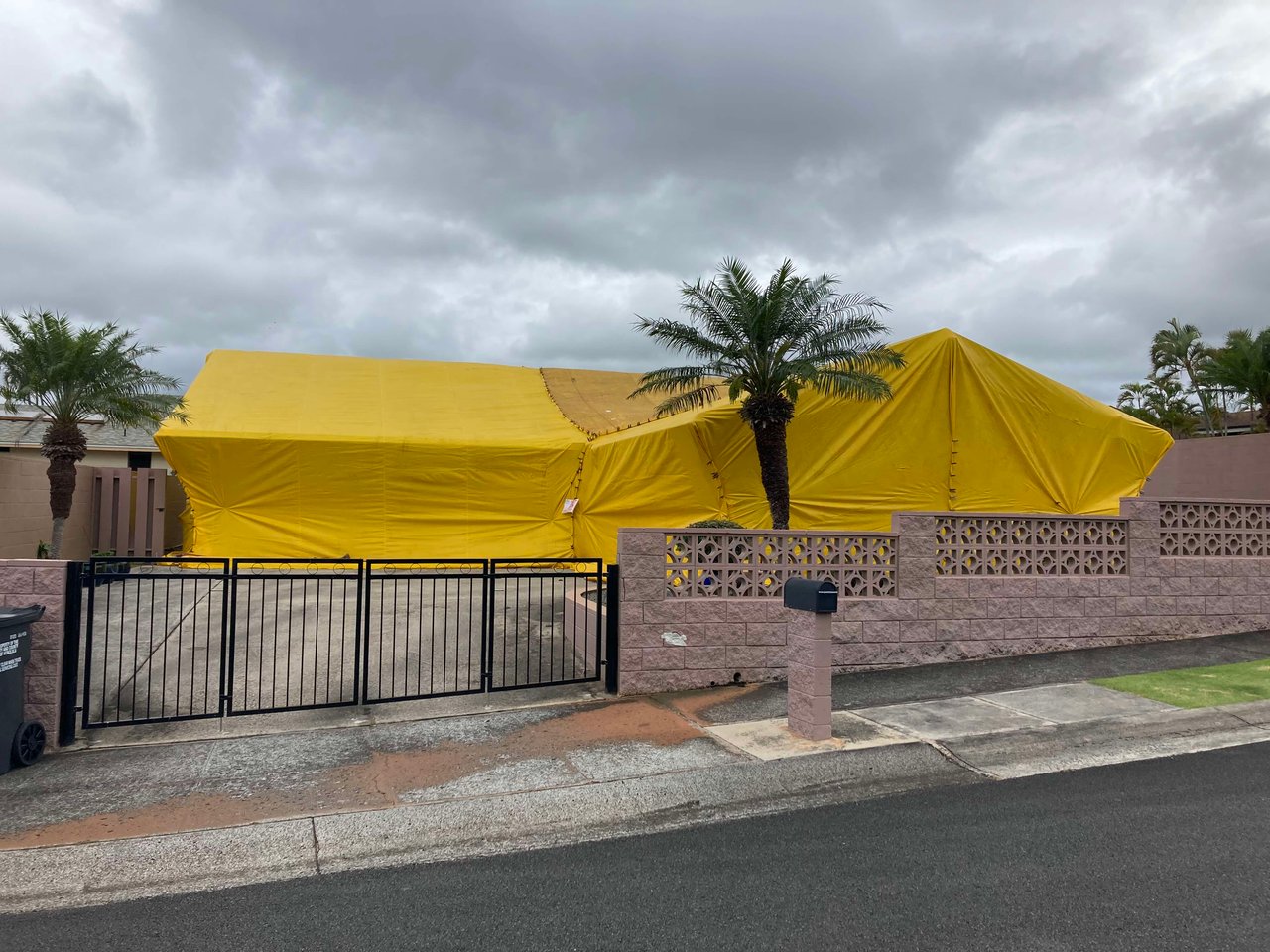
Whole-house tent fumigation with Vikane $2,500 to $8,000 Confirmed drywood or aerial Formosan colonies in walls and attics
Combined liquid soil barrier plus in-ground bait system $3,200 to $6,500 Confirmed Formosan subterranean infestation, the published practice norm
Sentricon bait system, ongoing bond $400 to $700 per year Prevention, or documented protection to disclose to buyers
Spot treatment Varies widely Isolated drywood pockets, no guarantee of colony elimination

The numbers are ranges because home size, foundation type, and colony access all move the price. What they do not move is the calculus at closing. A $5,000 treatment negotiated in advance is a business decision. The same $5,000 asked for as a credit five days before recording is a concession made with a moving van on the calendar.

Two months to listing. Repair cosmetic damage from any treatment, particularly landscaping affected by tenting or trenching. Assemble your documentation: the private TIR, any treatment invoices, warranty or bond paperwork, and the pest control operator's license number.

At listing. Disclose what you know on the Seller's Real Property Disclosure Statement. Hawaiʻi asks only for information within the seller's knowledge and observable from accessible areas, but any history of termite evidence or treatment belongs there. The PC-9 form itself directs the inspector to request prior termite history, so the disclosure is going to surface either way. Better it comes from you first.

The inspector picks itself, but the buyer picks the inspector

One counterintuitive piece of local practice: even though the seller pays, experienced Oʻahu listing agents typically let the buyer choose the inspector. The logic is protective. If the seller selects the operator and something is missed, the seller carries the liability post-closing. If the buyer selects, and something is missed, that is the buyer's decision. The buyer almost never objects to this arrangement because it feels favorable to them.

For a Manoa seller with an older home, this is one more reason to run your own inspection first. You are not trying to shop for a friendlier report. You are trying to know what the buyer's inspector is going to find, so nothing on the day of that walk-through is a surprise.

What "clean" looks like at a Manoa address

A clean report on a valley home rarely means the inspector found no conducive conditions. It usually means the inspector found no visible evidence of active infestation and only routine notes about the moisture and vegetation that come with the neighborhood. That is a realistic goal. The unrealistic goal is a report that reads like it came from a slab-on-grade home in a dry coastal zone.

The buyers who make offers on Manoa homes tend to understand this. They are choosing the valley for the same reasons the termites did. What they are looking for in the report is evidence that the current owner has been paying attention: a recent bond, a recent treatment, or a maintenance record that shows moisture is being managed rather than ignored. That is a story you can only tell if you started nine months ago.

FAQ

Does a Sentricon bond transfer to the new owner? Most bonds are transferable, sometimes with a small fee. Read the specific bond language, and if it is transferable, position it as an asset in the listing rather than a line item at closing.

If tenting damages my landscaping, who pays? The seller. Standard purchase contract language notes that treatment may damage plants and improvements, and that risk sits with the party paying for the treatment. In Manoa, where mature landscaping carries real value, this is another argument for treating before you list rather than during escrow.

Is a private pre-listing TIR the same document the buyer's inspector will produce? Structurally, yes. Both are PC-9 form reports from a licensed pest control operator. The buyer's report is the one that governs the transaction because of the 15-day validity window, but your private report gives you the intelligence to control what that later report says.

What if my home has never had a termite issue? That is common and worth preserving. Monthly visual inspections, moisture control near the foundation, avoiding wood-to-soil contact, and keeping planters and vegetation off the exterior walls are the four habits that keep a clean history clean. If you plan to list, document the absence of history the same way you would document a treatment.

The termite inspection is the one part of a Hawaiʻi closing where the seller has the most control before the transaction begins and the least once it starts. In Manoa, the gap between those two moments is wider than it is anywhere else on the island.

If you are thinking about listing a Manoa home in the next year and want a walk-through that maps your specific property against the PC-9 form before any buyer sees it, Diane Ito would be glad to sit down with you. Request a personal consultation, and bring the questions the checklist did not answer.

Work With Diane

Specializing in mid-century, modern Hawaii homes, her desire to broaden the scope of the service has been successfully achieved as a 5-time award winner of the Top 100 agents in Hawaii by Hawaii Business Magazine.